The Malattia Leventinese Consortium
Enabling Clinical
Trials in Malattia
Leventinese.
Like AMD.
But monogenic.
Ready for trials.
Why Malattia Leventinese?
- 01
A monogenic retinal dystrophy that closely resembles age-related macular degeneration (AMD).
- 02
A genetically defined disease driven by extracellular matrix abnormalities and complement overactivation, enabling the study of drusen biology without confounding factors such as ageing or smoking.
- 03
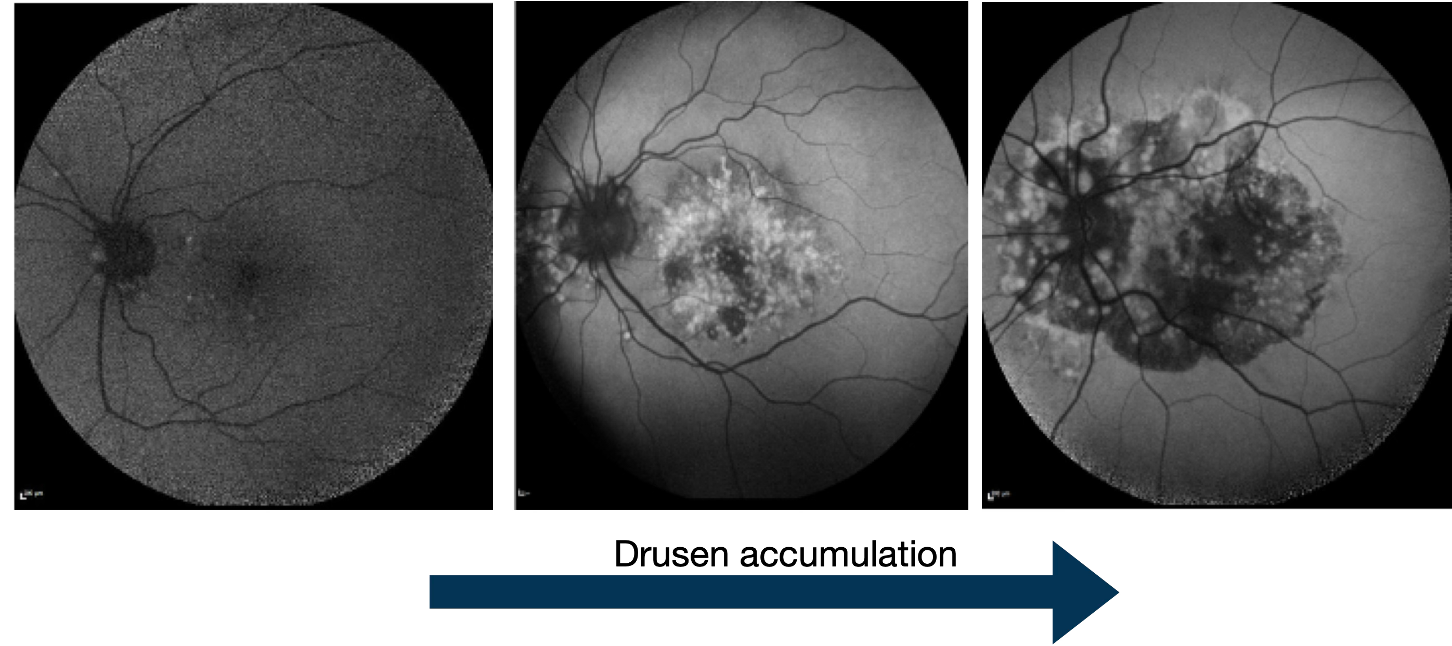
Progressive and sustained drusen accumulation provides a clear, quantifiable biomarker throughout disease progression, unlike AMD where drusen often regress in late-stage disease.
- 04
A clinically validated target for complement inhibition, supported by in vivo proof-of-concept demonstrating the efficacy of CFB inhibition in an EFEMP1 mouse model.
- 05
Minimal choroidal neovascularisation and a relatively young patient population provide optimal conditions to explore systemic complement inhibitors.
- 06
An ideal setting to confirm the mechanism of action of complement inhibitors and evaluate their therapeutic potential in a genetically homogeneous patient population.
The Consortium.
Long-standing partnerships, trial infrastructure and the largest longitudinal Malattia Leventinese cohort worldwide.
- LuganoM. Menghini
- BonnM. Pfau
- OxfordC. Ehrenzeller
Approach modeled after MACUSTAR, the PINNACLE Study and the MACular TELangiectasia Project.
Drusen biology, in isolation.
Why biomarkers matter.
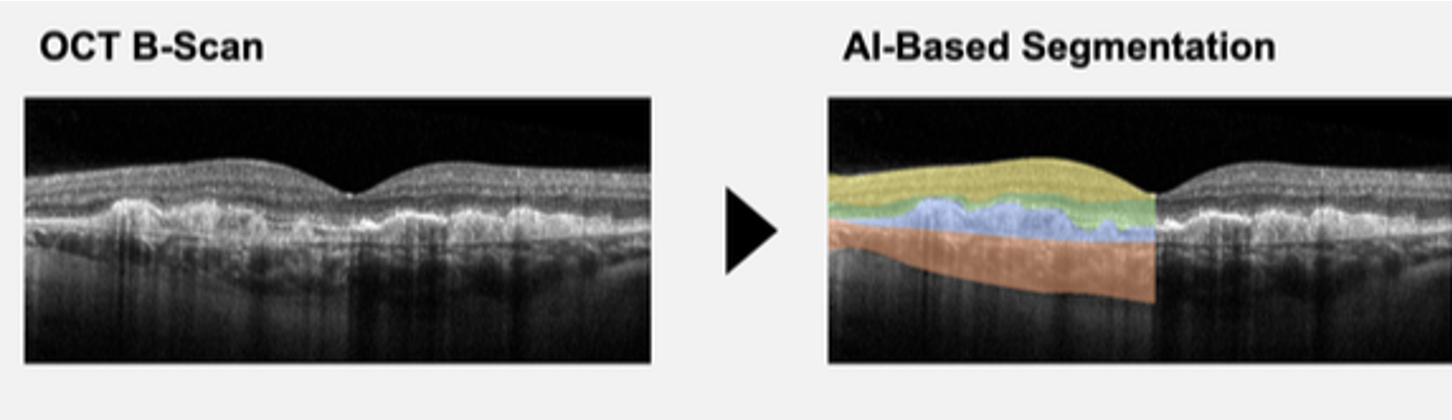
We aim to establish biomarkers that predict progression and define clinical endpoints. While therapies are coming, identifying biomarkers stands at the bottleneck.
Two studies, one endpoint strategy.
Long-term progression of Malattia Leventinese / Doyne Honeycomb Retinal Dystrophy
Goal of N > 150 participants across six centres. We hypothesise that drusen-area imaging biomarkers and lifestyle factors predict progression rate to sight-threatening stages.
Understand the long-term progression & validate imaging biomarkers.
New natural history study
Goal of 100 patients · 3 visits · multimodal imaging and visual-function testing.
A cohort ready to roll over into a future treatment trial.
Publications.
- Drusen Volume as Clinical Outcome Measure in Subjects with Malattia LeventineseEhrenzeller C, Cancian G, Paris A, Grimaldi G, Pfau M, Menghini M.Retina 45(6):1192–1199, June 2025. · DOI 10.1097/IAE.0000000000004407.
- Clinical Surrogate Endpoints in Malattia Leventinese / Doyne Honeycomb Retinal DystrophyEhrenzeller C, Cancian G, Kostin V, Peyla A, Ansari G, Paris A, Grimaldi G, Pfau M, Menghini M.IOVS, under review.
- Interactions between EFEMP1 and TIMP3 and relevance to age-related macular degenerationEhrenzeller C, MacLaren R.Opthalmology Science, in press (June 2026)
Leadership.



Contact.
Together we can establish the biomarkers that will enable the next generation of retinal therapies for Malattia Leventinese.
Messages are routed to the consortium coordination inbox and shared only with the coordinating investigators. No content is stored on this website; your message is delivered by email and treated as confidential correspondence between invited collaborators.